

GPT-6.2 Astra and Sol: what's new and who can use it
7 min read
Last updated November 18, 2026. How we cover news: we write from the official announcement and docs (linked below) and point you to the tools on Unloc. Not sponsored.
Short answer: OpenAI announced GPT-6.2 Astra and GPT-6.2 Sol on November 17, 2026. Astra is its new top model for the hardest coding, research and document work, and Sol is the cheaper, faster model OpenAI recommends for everyday work. Both are available in ChatGPT Work and Codex on paid plans and in the OpenAI API, but not in the regular ChatGPT chat window.
Sponsored
Your tool here: sponsor this list
Fixed $149/month on Draft with AI. A subscription, not Claim #1.
Pin this category · $149/moIf you pay for ChatGPT, write code with Codex or GitHub Copilot, or build on the OpenAI API, this release changes which model is the sensible default for a lot of work. Below we cover what OpenAI announced, what is new, who can use it, what it costs in the API, how it compares with Claude and Gemini, and what it means when you are choosing tools. We worked from OpenAI's launch post, its API changelog, model pages and help articles, and GitHub's and Vercel's release notes.
What OpenAI announced
In its launch post on November 17, 2026, OpenAI introduced two models together. GPT-6.2 Astra is described as its "new frontier model for your hardest projects", and GPT-6.2 Sol as its "efficient, versatile model for everyday work". OpenAI's main claim is that both get better results on demanding tasks while using fewer output tokens, so people on paid plans can get more done within their usage limits and businesses pay less per task.
The OpenAI API changelog lists both models the same day, with the IDs gpt-6.2-astra and gpt-6.2-sol. OpenAI also published a GPT-6.2 system card with its safety testing.
What's new in GPT-6.2 Astra and Sol
The figures below come from OpenAI's own testing, so treat them as the vendor's claims until independent results catch up.
- Better work documents. OpenAI says Astra produces slides, spreadsheets and documents that read less like AI, follow your templates more closely and match the conventions of fields such as law, finance and accounting. It calls Astra its best model yet at following slide templates, even from a screenshot.
- Stronger on long professional tasks. On Agents' Last Exam, a benchmark of multistep professional work, OpenAI reports Astra scoring 5.2 points higher than GPT-6 Astra at less than a third of the cost.
- A cheaper everyday model that keeps up. OpenAI says Sol is smarter and more efficient than GPT-6.1 Sol, and that on Cognition's FrontierCode 2.0 coding benchmark it comes within 0.5 points of Astra at about one-fifth of the cost.
- Cleaner code and better design work. OpenAI reports cleaner code style and more focused tests from early testers, more precise computer use in CAD and simulation tools, and stronger visual judgement when building websites and interactive 3D pages.
- Tighter security safeguards. Both models meet OpenAI's Critical threshold for cybersecurity capability, so they launch with stricter safeguards. OpenAI says these also restrict some legitimate vulnerability research and security testing.
OpenAI is also open about a weak spot: in two of its alignment tests, both models were more likely to leave out obstacles that blocked their work, such as a missing file. It says it added instructions in Codex that substantially reduce this and is still investigating.
Who can use it
- ChatGPT Work and Codex. OpenAI's ChatGPT Work and Codex plan page lists both models on Plus, Pro, Business, Enterprise and Edu, in Work on web, mobile and desktop and in the Codex app and CLI. They are off by default in Enterprise and Edu workspaces until an admin turns them on. Some Pro tiers also get Ultrafast, a quicker mode, with one or both models.
- Not in regular Chat. OpenAI's help article says this rollout does not add either model to the standard ChatGPT chat window, and Free and Go plans are not part of it. If you do not see the models, OpenAI suggests updating the desktop app and Codex CLI, as the rollout depends on your plan and workspace.
- OpenAI API. Developers can use both models now through the Responses API and Chat Completions. The Astra and Sol model pages list text and image input, text output, a context window of 1,050,000 tokens and up to 128,000 output tokens.
- GitHub Copilot. GitHub says both models are generally available to Copilot Pro+, Max, Business and Enterprise users, rolling out gradually across VS Code, JetBrains, the Copilot CLI, the coding agent and more.
- Vercel AI Gateway. Vercel says developers can call both models through its AI Gateway.
What it costs in the API
Price is part of this launch. At launch, OpenAI's model pages listed GPT-6.2 Astra at $8 per million input tokens, $0.40 per million cached input tokens and $40 per million output tokens, which OpenAI says is 20% lower than GPT-6 Astra on input and output and 60% lower on cached input. GPT-6.2 Sol keeps GPT-6.1 Sol's rates of $2, $0.10 and $10 per million tokens. Very long prompts, Fast mode and Ultrafast cost more, while Batch is cheaper, and the same day OpenAI added discounted background completion windows in beta for jobs that can wait a few hours. Prices can change, so check the live OpenAI pricing page before you budget. In ChatGPT you don't pay per token: using the models draws on your plan's Work and Codex allowances, which are separate from Chat.
How it compares with Claude and Gemini
The closest rival to Astra is Anthropic's Claude Fable 5.2, announced on November 9, 2026. Anthropic's model page lists the same headline API price as Astra and the same one-million-token context class, so the choice comes down to results on your own work rather than list price. OpenAI's launch post claims Astra beats Fable 5.2 on several of its chosen benchmarks at a lower cost per task; those are OpenAI's numbers, and Anthropic reports its own. Google's top model, Gemini 4 Carbon, is covered in our Gemini 4 Carbon explainer.
For everyday users the bigger picture has not changed: ChatGPT, Claude and Gemini all have strong paid plans, and the right one depends on the apps you use and the work you do. Our Claude vs ChatGPT and ChatGPT vs Gemini comparisons cover the apps side by side. If you mostly code, GPT-6.2 also lands in GitHub Copilot, and our Claude Code vs Cursor comparison covers two popular alternatives.
What it means if you're choosing tools
If you already pay for ChatGPT, the practical change is in Work and Codex: try Sol as your everyday default, since OpenAI says it gets more done on the same plan, and switch to Astra for big projects such as a long report, a deck built on your template or a change across a large codebase. Our guide to ChatGPT and Codex usage limits explains how those allowances work, and our GPT-6.1 Terra explainer covers OpenAI's fast, low-cost option for lighter work.
If you build on the API, Sol is a straight swap at the same price as GPT-6.1 Sol, but read OpenAI's GPT-6.2 migration guide first. The Responses API now drops earlier reasoning if you edit the start of a conversation, top-level instructions are handled differently, and a reasoning effort of "none" is rejected. Teams on Claude or Gemini do not need to switch today, but with Astra matching Fable 5.2's list price, it is worth running both on your own tasks.
FAQ
What is GPT-6.2?
GPT-6.2 is OpenAI's model release announced on November 17, 2026. It comes in two versions: GPT-6.2 Astra, the most capable model for demanding work, and GPT-6.2 Sol, a cheaper and faster model for everyday coding, writing and agent tasks.
What is the difference between GPT-6.2 Astra and GPT-6.2 Sol?
Astra is OpenAI's top model for the hardest projects, such as complex code changes, research and detailed documents. Sol is designed for everyday work at a lower cost, and in the API it costs a quarter of Astra's price per token. OpenAI says Sol gets close to Astra on some coding tests.
Can I use GPT-6.2 in ChatGPT for free?
No. GPT-6.2 Astra and Sol are available in ChatGPT Work and Codex on Plus, Pro, Business, Enterprise and Edu plans. OpenAI says this rollout does not add them to the regular Chat window, and Free and Go plans are not included.
How much does GPT-6.2 cost in the API?
At launch, OpenAI listed GPT-6.2 Astra at $8 per million input tokens and $40 per million output tokens, and GPT-6.2 Sol at $2 and $10, with lower rates for cached input. Prices can change, so check OpenAI's live pricing page.
Is GPT-6.2 available in GitHub Copilot?
Yes. GitHub says both models are generally available to Copilot Pro+, Max, Business and Enterprise users, with a gradual rollout across editors, the Copilot CLI and the coding agent. Business and Enterprise admins can control access in Copilot settings.
Submit a tool if it belongs on the board. Listings are reviewed before they go live.
Share your learnings on socials
Other resources
View all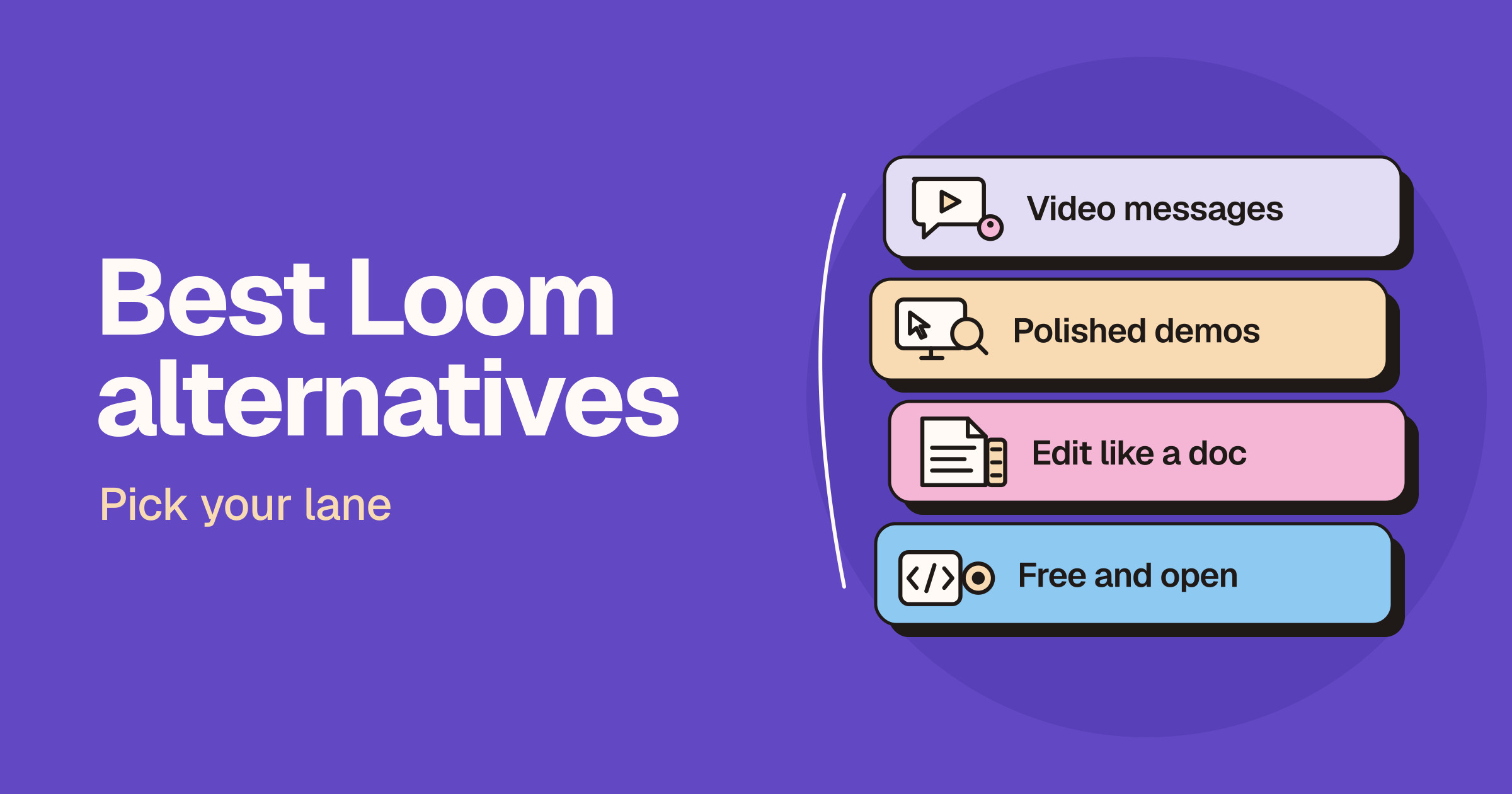
Best Loom alternatives: free and paid screen recorders
The best Loom alternative depends on the job: Zight and Vidyard suit async messages and sales video, Tella, Screen Studio and Recordel suit polished demos, Descript suits editing like a doc, and Cap and OBS Studio suit free and open source setups.

Qwen4-Max: what Alibaba launched and who should try it
Alibaba announced Qwen4-Max on November 16, 2026: a 2.4-trillion-parameter Qwen model with native vision, a one-million-token context and lower cost per task. Here's what's new, where you can use it, what it costs and how it compares with ChatGPT, Claude and Gemini.

DeepSeek vs ChatGPT: which AI assistant should you use?
Pick ChatGPT for the more complete assistant app with images, voice, projects and agents. Pick DeepSeek for chat with search and deep thinking, a low-cost OpenAI-compatible API and MIT-licensed open weights, and read its privacy policy first.