

Best Lovable alternatives: free and paid AI app builders
7 min read
Last updated November 22, 2026. How we pick: we compare the job each tool is for, from public product pages, not a paid ranking.
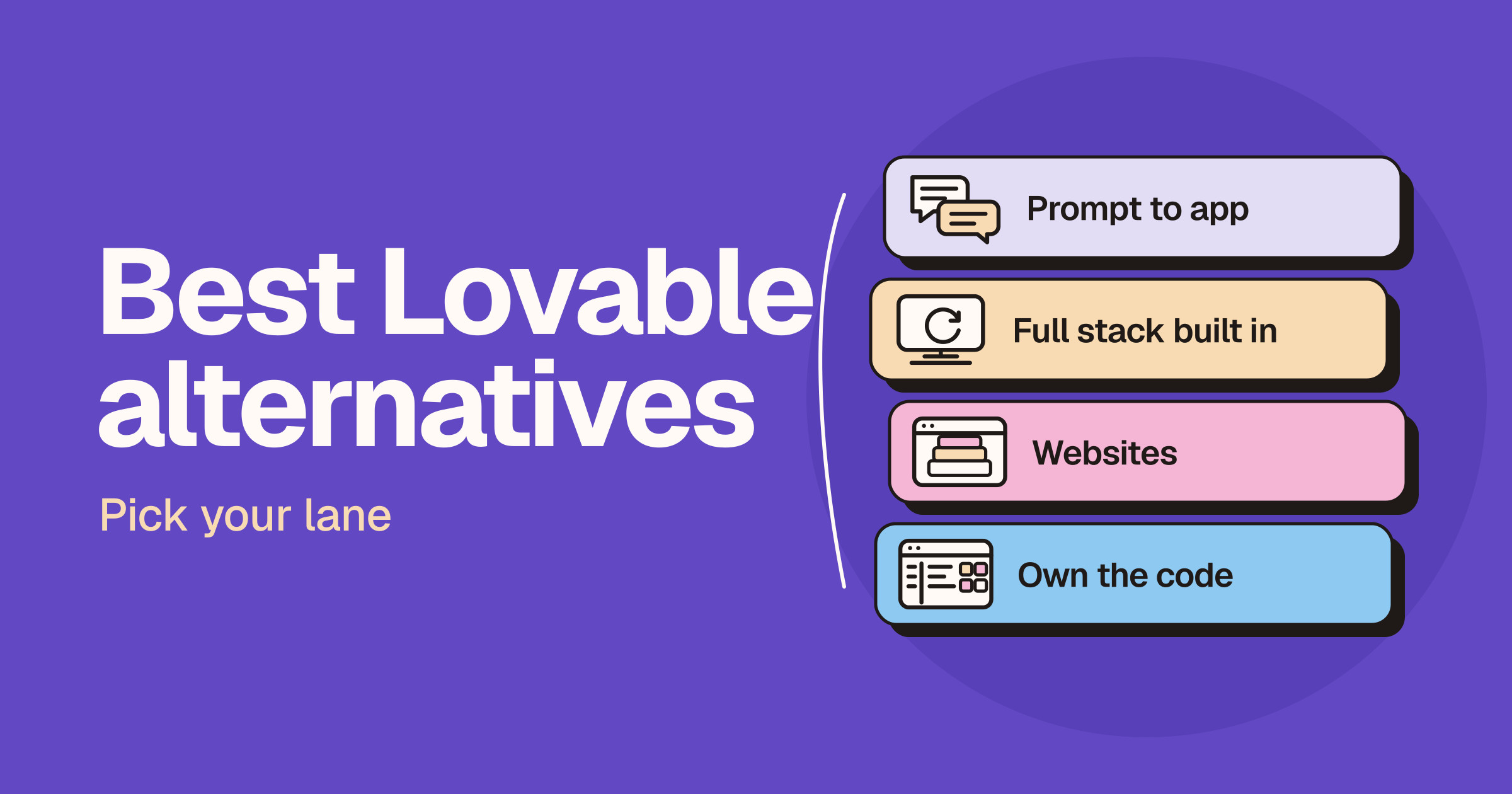
Short answer: the best Lovable alternative depends on what you are building. Pick Bolt for the closest like-for-like swap (chat to build a web app, with hosting and databases included), v0 if you want React and Next.js code that deploys to Vercel, Replit if you want authentication, a database, hosting and monitoring built in, and Framer if what you really need is a website. If you would rather own and edit the code yourself, use Cursor or Claude Code.
Sponsored
This spot is open.
- Pinned at the top of Ship with an agent
- Highlighted on the home page
- Fast review
This guide is for founders, product managers, marketers and builders who like Lovable but want a different workflow, more control over the code, or a better fit for the project. Lovable’s own pricing page describes it as an AI software engineer that lets anyone build websites and web apps by chatting, and it lists invite-only publishing on the free plan, with custom domains and badge removal on paid plans. Everything below comes from each company’s own website, linked in the text. We do not print prices or credit amounts, because plans change often, so check the live pricing pages before you pay.
Quick comparison
| Tool | Best for | Free option |
|---|---|---|
| Bolt | The closest swap: chat to build web apps, sites and prototypes | Free plan with daily token limits and Bolt branding on sites |
| v0 | React and Next.js apps that deploy to Vercel | Free plan with a daily message limit |
| Replit | Full stack apps with auth, database and hosting built in | Free Mode, with limits set by plan |
| Framer | Marketing sites and portfolios with CMS and hosting | Free plan with monthly AI credits and a Framer domain |
| Cursor | Owning and editing the code with an AI agent | Free plan with limited agent requests |
| Claude Code | A coding agent that works in your terminal, IDE or desktop | No free plan; included with paid Claude plans or billed through the API |
Bolt: the closest like-for-like swap
Bolt’s homepage invites you to create apps and websites by chatting with AI, starting from a prompt, a Figma file, a GitHub repo or a team template. Bolt says it routes each task to the right model, tests and refactors as it goes to reduce errors, and can build on your design system. Bolt Cloud adds hosting with analytics and custom domains, databases, user management and authentication, so you do not have to stitch together separate services.
Its pricing page lists a free plan with no card required, daily and monthly token limits, Bolt branding on websites and website hosting. Paid plans remove the branding, add custom domains, private sharing and token rollover, and Teams adds shared billing and admin controls. If Lovable’s chat-first flow suits you and you just want a different tool, Bolt is the nearest match. See our Bolt vs Lovable comparison for the detail.
v0: for React and Next.js apps on Vercel
v0 is Vercel’s app builder. Its homepage says it generates working applications from a prompt and publishes them as live websites, with GitHub sync to push code to your repository, one-click deployment to Vercel, a visual Design Mode, templates and reusable design systems. Vercel says v0 plans, creates tasks and connects to databases as it builds, and there is an iOS app for building on your phone.
The v0 pricing page lists a free plan with deploys to Vercel, Design Mode, GitHub sync and a daily message limit. Paid plans add access to all models, monthly credits per user and team sharing, with usage measured in tokens. v0 is the natural pick if your team already ships on Next.js and Vercel. Compare the two in Lovable vs v0.
Replit: for full stack apps with the backend built in
Replit’s homepage says you can turn ideas into apps with no coding needed, and start from a website, mobile app, design, slides, a game and more. Its Agent describes and publishes your project, and Replit lists built-in authentication, database, hosting and monitoring with no setup, plus more than a hundred integrations such as OpenAI, Stripe and Google Workspace. An infinite canvas lets you explore designs visually and apply them to your app.
Replit highlights Free Mode, which it says lets you brainstorm and create without token costs, and its pricing page shows how much Free Mode use and model credit each paid plan includes, with an Enterprise plan for SSO and admin controls. Choose Replit if you want the app, the database and the hosting in one place. Our Lovable vs Replit comparison goes deeper.
Framer: if what you need is a website
Many people reach for Lovable when they really need a marketing site, portfolio or landing page. Framer’s homepage calls it a pro website builder with a design agent: you describe what you need, the agent builds layouts, sections and components, and everything stays editable on a design canvas. Framer says hosting, CMS, analytics, SEO and AEO are built in, so you can publish without a separate build step, and a CMS agent can set up and update your content.
Framer’s pricing page lists a free plan with monthly AI credits and a free Framer domain, and paid site plans that add your own domain, CMS collections, more bandwidth and, on higher tiers, staging and branching with previews. If your project is content and pages rather than app logic, Framer will usually be simpler. See Webflow vs Framer if you are weighing site builders.
Cursor: when you want to own the code
Prompt-to-app builders are fast, but some projects outgrow them. Cursor describes itself as a coding agent for building ambitious software, with a desktop editor, a command line tool, cloud agents and automations. You hand off tasks to its agents, review the changes and keep full control of a normal codebase that you can host anywhere.
Cursor’s pricing page lists a free plan with limited agent and chat requests, and paid plans with more usage, cloud agents and automations. It suits people who are comfortable reading code, or teams who want to take a Lovable prototype and keep building it as a real product. Our best Cursor alternatives guide covers the rest of that lane.
Claude Code: a coding agent for your own repo
Anthropic’s Claude Code page describes an agent you can hand a bug fix, a test or a multi-day migration, with permissions you set, and steer from the desktop app, terminal, IDE, Slack or the web. It runs on macOS, Linux and Windows and works with VS Code, JetBrains and GitHub.
Anthropic says Claude Code is available on its paid Claude plans, or billed at standard API rates through a Claude Console account, so there is no free tier to try it on. Like Cursor, it is for people who want an agent working inside a real codebase rather than a hosted app builder. Compare the two in Claude Code vs Cursor.
Which should you choose?
- You like Lovable’s workflow and want a similar tool: try Bolt first.
- Your team builds on Next.js and Vercel: v0 fits straight into that stack.
- You want auth, a database and hosting without extra accounts: Replit.
- You need a website, not an app: Framer.
- You want to own the code and keep building it: Cursor or Claude Code.
Most of these tools have a free way in, so the quickest test is to give two of them the same prompt and compare the results. Browse more options in Unloc’s AI tools directory.
FAQ
What is the best free alternative to Lovable?
Bolt and v0 both list free plans for building apps from a prompt: Bolt with daily token limits and Bolt branding on sites, and v0 with a daily message limit. For a website rather than an app, Framer also has a free plan. Check each live pricing page for the current limits.
Is Lovable free to use?
Lovable lists a free plan with no credit card needed. Its pricing page shows invite-only publishing on the free plan, while paid plans add custom domains, removal of the Lovable badge and a monthly credit balance.
Is Bolt better than Lovable?
Neither is better for everyone. Both turn a chat into a working web app with hosting included, so the choice comes down to which output, workflow and plan limits suit you. Give both the same prompt and compare, or read our Bolt vs Lovable comparison.
Which Lovable alternative is best for developers?
Developers who want full control usually prefer Cursor or Claude Code, which work inside a normal codebase you own. v0 is a good middle ground if you want generated React and Next.js code with GitHub sync and Vercel deploys.
Can I build a website instead of an app with these tools?
Yes. Bolt, v0 and Replit can all build websites, but if the project is mainly pages and content, a website builder like Framer, with its design agent, CMS, hosting and SEO tools, is often the simpler choice.
Submit a tool if it belongs on the board. Listings are reviewed before they go live.
Share your learnings on socials
Other resources
View all
Semrush vs Moz: which SEO tool should you use?
Pick Semrush for an all-in-one platform covering SEO, AI search visibility, local, content, social and ads. Pick Moz for focused, easier SEO tools with Domain Authority and a lower entry price.

ChatGPT for Accounting: what it does and who can use it
OpenAI announced ChatGPT for Accounting on November 18, 2026: an Accounting plugin plus QuickBooks, Xero, NetSuite and other partner plugins for month-end work. Here's what it does, which apps connect, who can use it and how it compares.
Best Midjourney alternatives: free and paid image generators
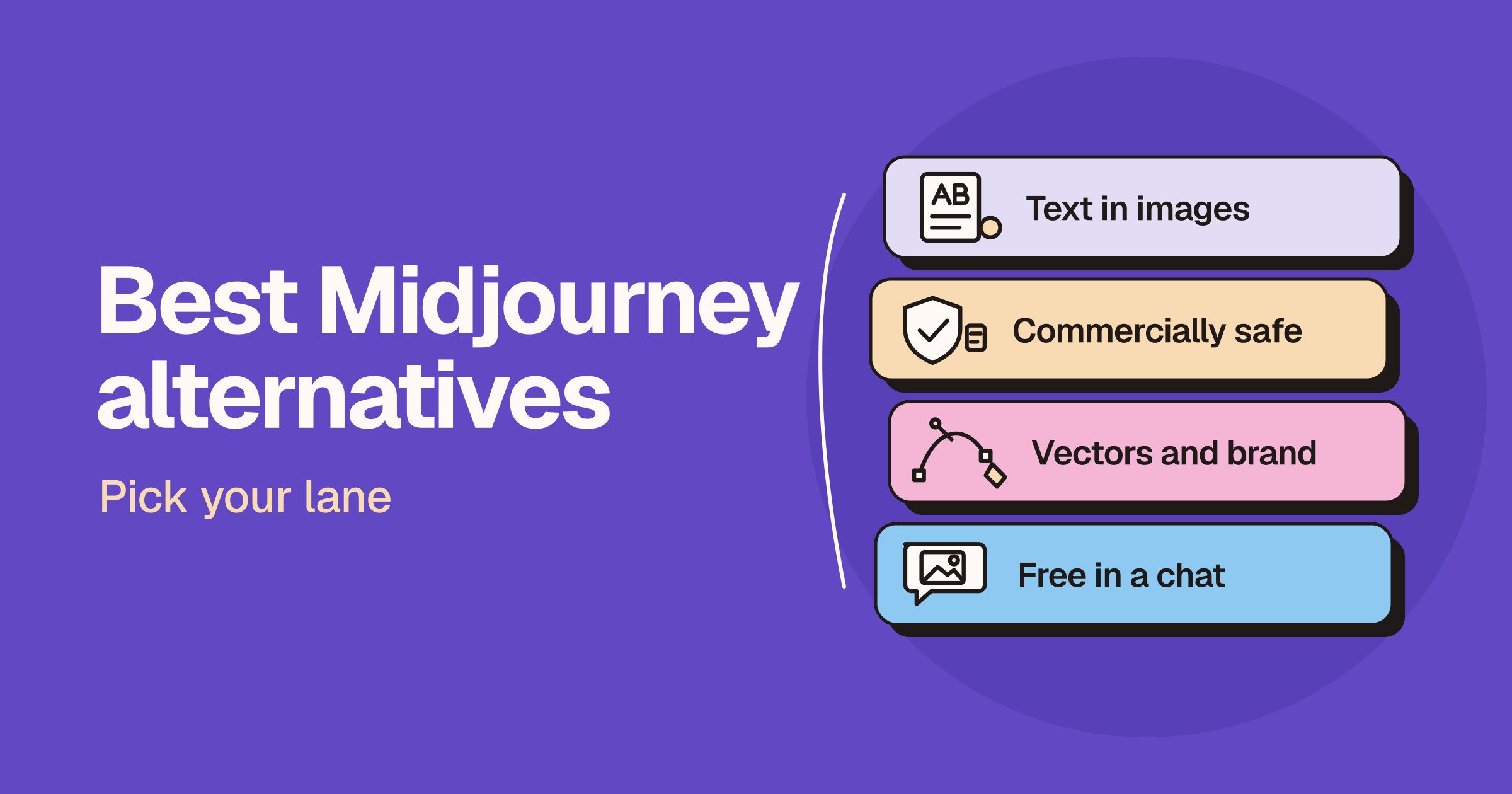
The best Midjourney alternative depends on the job: Adobe Firefly for commercially safe images, Ideogram for text in images, ChatGPT and Gemini for free images in a chat, Recraft for vectors, Flux for developers, Krea for many models and Canva for designs.