

Mistral Large 4 open weights: what Le Chonk is and who can use it
7 min read
Last updated October 30, 2026. How we cover news: we write from the official announcement and docs (linked below) and point you to the tools on Unloc. Not sponsored.
Short answer: Mistral Large 4, nicknamed "Le Chonk", is Mistral's trillion-parameter flagship model, and on October 29, 2026 Mistral released its weights for anyone to download. Mistral says it is now the best open-weight model for coding and is built for defensive cybersecurity. You can use it today through Mistral's API, Mistral Studio, OpenRouter or Vibe Code, or run it on your own servers, but the full model needs data-centre-class hardware.
Sponsored
Your tool here — sponsor this list
Fixed $149/month on Draft with AI. A subscription — not Claim #1.
Pin this category · $149/moIf you use Mistral's assistant Le Chat (now part of Mistral Vibe), build on open models, or are weighing an open model against Claude, ChatGPT and Gemini, here's what was released, what Mistral claims for it, who can realistically run it and what it means for choosing AI tools. We've used Mistral's announcement, the official model card and Hugging Face's technical write-up, and we flag where figures are Mistral's own.
What Mistral announced
Mistral first released Mistral Large 4 as a public preview on October 6, 2026, through its API only. On October 29, 2026 it announced an improved version and published the weights, after what it describes as three more weeks of reinforcement learning focused on coding and defensive security.
The key facts, from Mistral's model card:
- Size. About 1 trillion parameters in total, but it's a mixture-of-experts model, so only about 49 billion (52 billion including embeddings) are active for each token. That keeps it cheaper to run than its size suggests.
- Inputs. Text and images in, text out, with a 1 million-token context window and support for more than 160 languages.
- Reasoning modes. Low, Medium and High (the default). Hugging Face notes that reasoning can't be switched off entirely.
- Origin. Mistral says it trained the model from scratch on 3,800 NVIDIA Grace Blackwell GPUs in its own European data centres, which is central to its pitch to European governments and regulated companies.
What Mistral says it does well
Coding
Mistral's headline claim is that Large 4 is "the best open-weight model for coding". The figures it publishes:
- Terminal-Bench 4.0: 41%, up 13 points on the preview, which Mistral says puts it at the top of the open-weight models it compared, just ahead of GLM-5.3, while using 30% fewer output tokens.
- Artificial Analysis Coding Agent Index: 48%, which Mistral calls "effectively tied" with GLM-5.3 while using 47% fewer tokens per task on average.
- FrontierCode 2.0, a private benchmark from Cognition: 19.7%, the top score among the models in Mistral's chart.
- Human preference: in Surge Code's blind comparisons, graders preferred Large 4 over GLM-5.3, Kimi K3 and DeepSeek V4.1 Flash, but preferred Claude Opus 5.5 over Large 4 in 78% of prompts.
That last point is the honest summary: Mistral is claiming the lead among open models, not against the best closed ones. On the broader Artificial Analysis Intelligence Index, the model card says Large 4 scores 26, "the highest among western open-weight models", and acknowledges that leading Chinese open models score higher. Hugging Face describes it as the fifth-best open-weight model on that index as of October 29.
Cybersecurity
Mistral is pitching Large 4 at security teams that need to find, reproduce and patch vulnerabilities without the model refusing legitimate defensive work. It reports 51% on the Artificial Analysis Cyber Index, though its own chart shows a couple of other open models, including DeepSeek V4.1 Flash, scoring higher. Mistral says the model refused 96.6% of malicious cyber requests in its tests, the highest it measured among open models, and resisted 97.1% of attacks on the B3 agent security benchmark.
Mistral is also unusually frank about the risks. It says that since the preview it has seen "a potential for uplift to conduct real attacks" in live traffic and is tightening its guardrails. A more specialised cyber variant, built for penetration testing and red-teaming, is only available in preview to vetted partners such as Orange Cyberdefense. The launch post includes supportive quotes from security companies including Booz Allen Hamilton, Cisco, Cloudflare, CrowdStrike and Zscaler.
Everyday work
Mistral also reports gains on finance spreadsheet tasks (73.3% on Finch, second to Kimi K3 among the open models it compared) and web research (84.5% on BrowseComp). These are Mistral's own published numbers. It says a full technical report is "coming soon", and independent testing will matter more than launch charts.
Who can use Mistral Large 4, and how
There are three realistic routes.
- Through an API. Developers can call it as
mistral-large-4on the Mistral API and in Mistral Studio, or through OpenRouter and NVIDIA's hosted endpoints. Mistral says Microsoft Foundry is the first cloud provider to offer it. At launch, Mistral priced it at $0.70 per million input tokens and $2.10 per million output tokens (see Mistral's model docs for current pricing). - In Mistral's own apps. Mistral says you can try it in Vibe Code, its coding agent, by giving it a feature to build or a bug to fix in your own repository. Le Chat was renamed Mistral Vibe in August 2026, and the classic chat experience lives on as Vibe Chat. Mistral hasn't clearly said which Vibe plans get Large 4 in chat, so check the model picker in your account.
- On your own hardware. The weights are on Hugging Face in FP8 and NVFP4 versions, with day-one support in vLLM, SGLang, Transformers and llama.cpp, and fine-tuning guides for Axolotl, Unsloth and TRL. Hugging Face says the most heavily compressed (2-bit) versions can run on a single Apple Silicon Ultra machine with 512 GB of unified memory; anything larger needs multiple GPUs or servers.
In other words, "open weights" doesn't mean it will run on a laptop. For most individuals and small teams, the practical options are the API, OpenRouter or Vibe. Self-hosting is aimed at companies and public bodies with their own GPU infrastructure, or those who want to keep data inside their own environment.
The licence
Large 4 uses the Mistral Ecosystem Open-Weight License, which Mistral describes as a modified MIT licence. You can use, modify, fine-tune and sell products built on it, with one condition: businesses that offer the model itself as a hosted service need a separate commercial licence from Mistral. That's more permissive than many "open" licences, but it isn't a pure open-source licence, so check the terms if you plan to resell access.
Why this release matters
The timing stands out. A day earlier, Google announced Gemini 4 Carbon, which is also aimed at long coding tasks and cybersecurity but is limited for now to vetted cyber defenders. Mistral has taken the opposite route, publishing the weights while keeping only its specialised cyber variant restricted. As TechCrunch reported, Mistral is positioning the release around self-hosted use by enterprises and governments.
For anyone choosing AI tools, the takeaways are:
- If you want the strongest model for hard coding work, Mistral's own preference test still puts Claude Opus 5.5 ahead. See Claude vs ChatGPT and Claude Code vs Cursor for the closed-model options.
- If cost per task matters, Large 4's launch pricing and token efficiency make it worth testing for agents and batch work, especially through OpenRouter, where you can compare it with other models without changing your code.
- If data control or European origin matters, this is now one of the most capable models you can host yourself, with a licence that allows commercial use.
- If you just want a chat assistant, Le Chat, now Vibe Chat, remains Mistral's consumer option. Our ChatGPT vs Gemini and Claude vs Gemini comparisons cover the other mainstream assistants.
FAQ
What is Mistral Large 4 (Le Chonk)?
Mistral Large 4, nicknamed Le Chonk, is Mistral's flagship AI model: a mixture-of-experts model with about 1 trillion total parameters and roughly 52 billion active per token, a 1 million-token context window and text and image input. Mistral previewed it on October 6, 2026 and released the open weights on October 29, 2026.
Is Mistral Large 4 really open source?
It's open-weight. Anyone can download the weights from Hugging Face and use, modify, fine-tune and commercialise them under the Mistral Ecosystem Open-Weight License, a modified MIT licence. The main restriction is that companies offering the model as a hosted service need a separate commercial licence from Mistral.
Can I run Mistral Large 4 on my own computer?
Only on very high-end hardware. Hugging Face says the 2-bit compressed versions can run on a single Apple Silicon Ultra machine with 512 GB of unified memory, while other versions need multiple GPUs or distributed setups. Most people will find the Mistral API, OpenRouter or Mistral Vibe more practical.
Is Mistral Large 4 better than Claude or GPT?
Mistral doesn't claim that. It says Large 4 leads open-weight models on several coding benchmarks, but in Surge Code's blind preference test it published, Claude Opus 5.5 was preferred over Large 4 in 78% of prompts. On the Artificial Analysis Intelligence Index, it trails several open models from China as well as the top closed models.
How much does Mistral Large 4 cost?
The weights are free to download. On the Mistral API, Mistral priced it at launch at $0.70 per million input tokens, $0.07 per million cached input tokens and $2.10 per million output tokens. Check Mistral's model docs for current pricing, and OpenRouter or other providers for their rates.
Submit a tool if it belongs on the board. Listings are reviewed before they go live.
Share your learnings on socials
Other resources
View all
Windsurf vs GitHub Copilot: which AI coding tool is better?
Pick Windsurf, now Devin Desktop, for a standalone AI editor with Tab completions and a command centre for many agents and models. Pick GitHub Copilot for AI inside the IDE you already use and across GitHub, from code review to cloud agents.
Best Grok alternatives: 12 AI assistants and agents
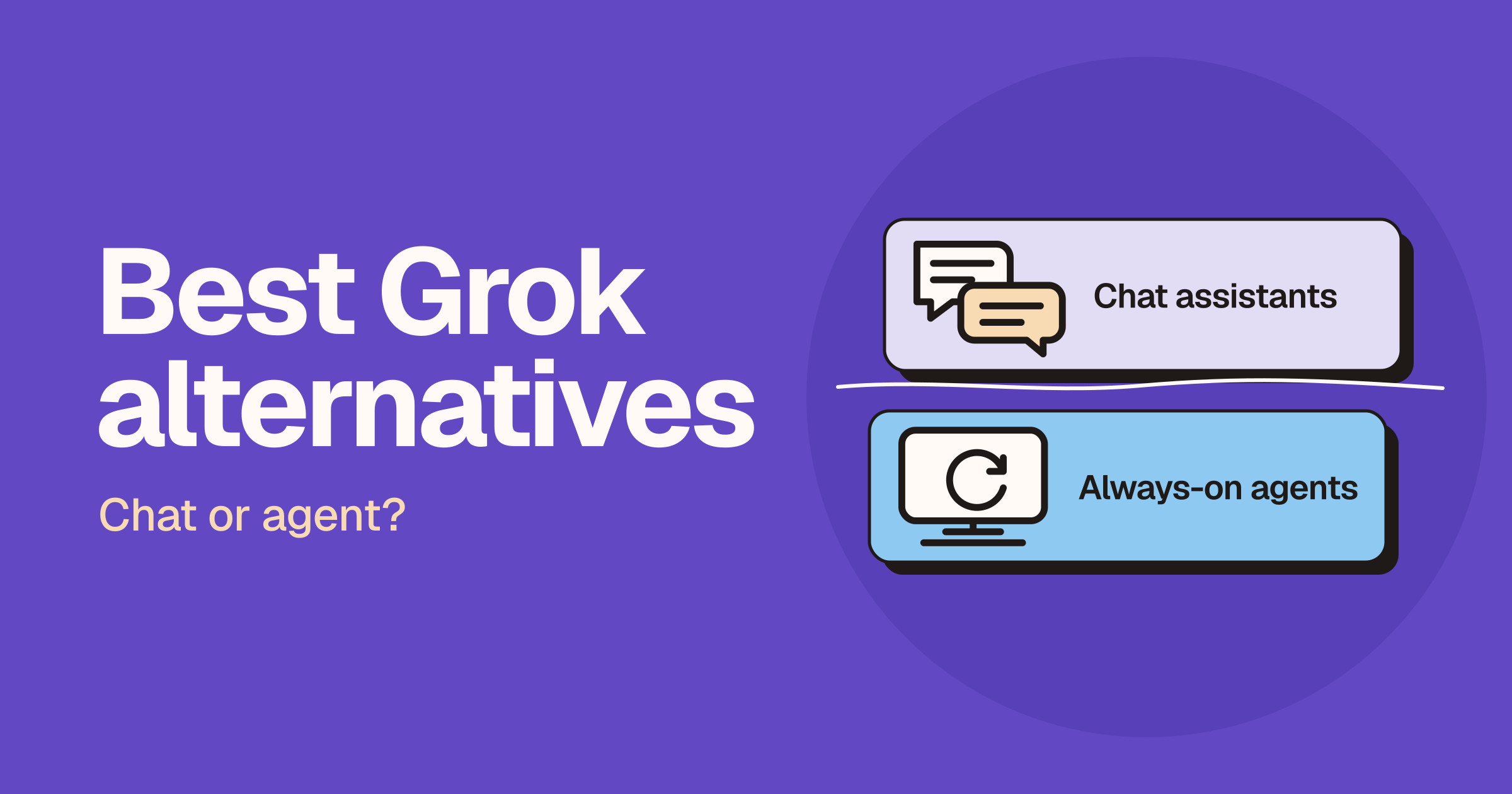
The best Grok alternative depends on the job: ChatGPT is the broadest general assistant, Claude is strongest for long documents and careful writing, Gemini fits teams already in Google Workspace, and Perplexity is built for cited web research. If you want an agent that keeps working on its own computer after you close the app, look at Grok Bot, Muse, Dots, Hermes Agent or OpenClaw instead. Grok itself remains the pick when the question is about what is happening right now on X.
Best Cursor alternatives: IDEs, agents and app builders
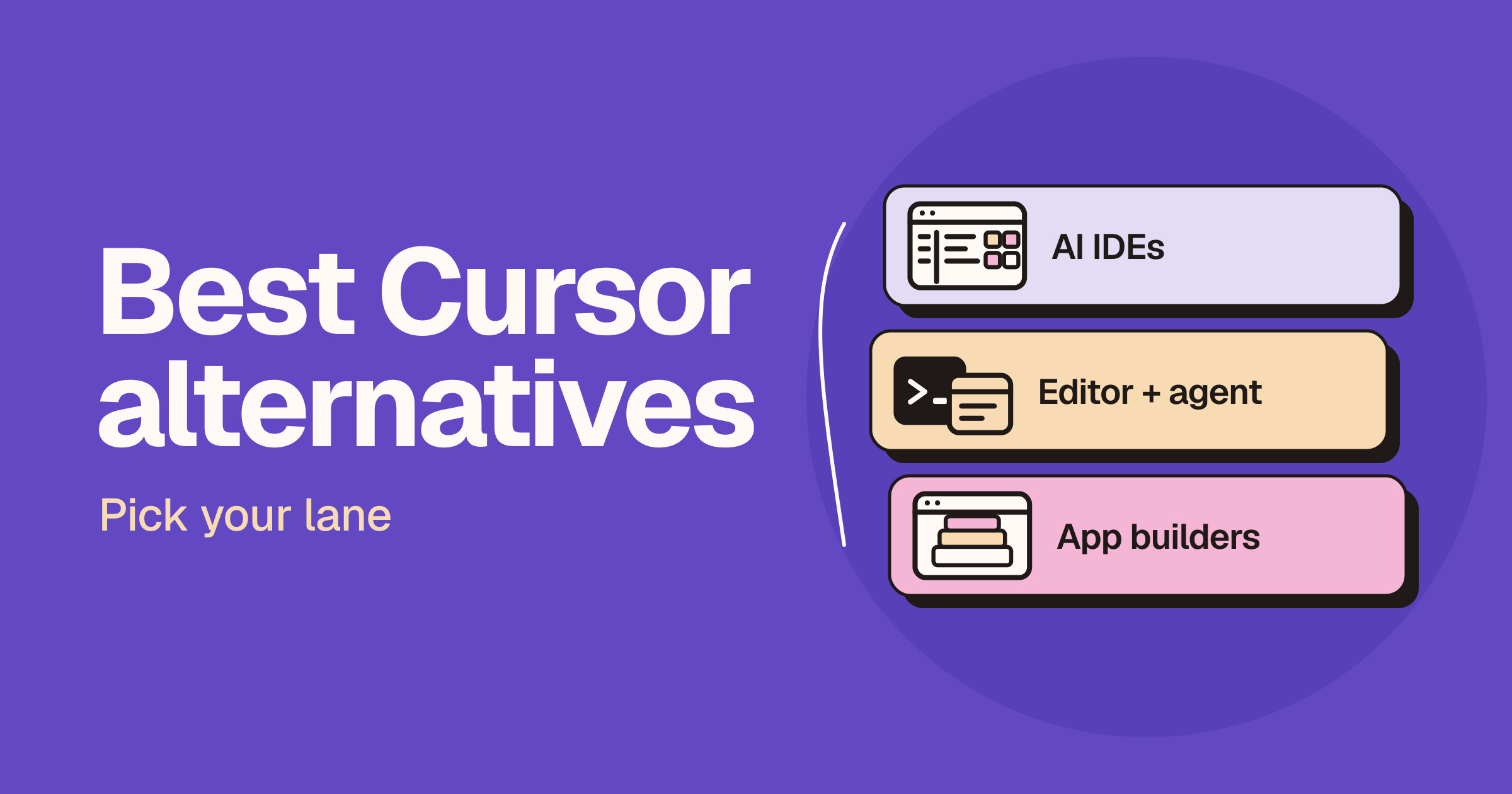
The best Cursor alternative depends on how you work: Windsurf, now called Devin Desktop, is the closest full AI IDE, GitHub Copilot lets you keep the editor you already use, and Claude Code is a coding agent that runs in the terminal, IDEs, a desktop app and the web. If you want to build a whole app from a prompt rather than edit an existing repo, Replit Agent, Bolt, Lovable and v0 are the better fit.